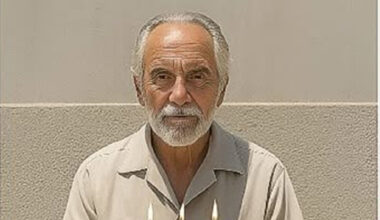
Basic Information
| Field | Details |
|---|---|
| Full Name | Arthur Wesley Millard Jr. |
| Birth Date | November 26, 1942 |
| Birthplace | Texas, United States |
| Death Date | November 11, 1991 |
| Age at Death | 48 |
| Nationality | American |
| Known For | Father of Bart Millard of MercyMe |
| Children | Bart Millard, Stephen Millard |
| Grandchildren | Sam, Gracie, Charlie, Sophie, Miles Millard |
| Parents | Arthur Wesley Millard Sr., Mary Leona Tyler |
| Public Portrayal | Character in the film I Can Only Imagine |
Early Life and Background
Arthur Wesley Millard Jr. was born in Texas in 1942, during a decade marked by war, industrial growth, and rigid ideas of masculinity. Raised by Arthur Wesley Millard Sr. and Mary Leona Tyler, he grew up in a cultural environment that valued toughness, discipline, and emotional restraint. These early influences shaped his personality and would later echo through his family life.
Little is publicly documented about his childhood education or early ambitions. What is known suggests a man shaped more by circumstance than introspection. He lived largely outside the public eye, unknown to fame during his lifetime. Yet, like a stone dropped into water, his actions created ripples that extended far beyond his years.
Marriage and Family Formation
Arthur married Kathy Adelle “Dell” Lindsey, and together they had two sons, Stephen and Bart. The family lived in Texas, and for a time appeared outwardly ordinary. However, the marriage eventually fractured. Dell left the family when Bart was still a child, a departure that altered the household forever.
After the separation, Arthur became the sole parent in the home. The weight of responsibility, unresolved anger, and emotional immaturity combined into a volatile environment. Family life during this period has been described as strict, unpredictable, and often painful.
Relationship With Bart Millard
The relationship between Arthur Wesley Millard Jr. and his younger son, Bart Millard, is what made him most famous. Bart has been candid about experiencing emotional and physical violence as a child. For years, Bart saw his father as an unstoppable storm rather than a source of security, and Arthur governed the household with terror.
This bond served as the emotional foundation for Bart’s subsequent artistic endeavors. Arthur was a defining force rather than just a supporting character. Arthur serves as a metaphor for both the injury and the final recovery in Bart’s tale.
Arthur underwent a significant personal transformation in the late 1980s. He experienced a spiritual metamorphosis during a severe sickness. What had formerly been an angry guy started to soften. Long suppressed words were finally out. During Arthur’s latter years, the father and son made up, condensing decades of strife into brief moments of delicate beauty.
Days before Bart turned nineteen in 1991, Arthur passed away. Like a bridge hurriedly constructed before a flood, the reunion was genuine but unfinished.
Stephen Millard: The Elder Son
Stephen Millard, Arthur’s older son, has remained largely private. Public information about him is limited, reflecting a deliberate choice to live outside the spotlight. Stephen shared the same household and upbringing as Bart, and his presence is often noted during family milestones.
While Bart’s voice became public, Stephen’s story remains quieter. He stands as a reminder that every family narrative has multiple perspectives, many of them untold.
Kathy Adelle “Dell” Duncan: Former Wife and Mother
Arthur’s first wife and the mother of his children was Kathy Adelle “Dell” Duncan, who was born in 1943. An important turning point was when she left the family home. She maintained her ties to her sons while reconstructing her personality and relationships later in life.
Her absence had a significant impact on the dynamics of the household during Bart’s early years. However, rather than retreating, her later presence in her sons’ adult life demonstrates resilience. She is a symbol of both survival and loss in the larger narrative.
Grandchildren and the Next Generation
Arthur Wesley Millard Jr. never met his grandchildren, yet his legacy flows through them indirectly. Through Bart, Arthur became the grandfather of five children: Sam, Gracie, Charlie, Sophie, and Miles Millard.
Sam Millard has stepped into the public arena as a musician, echoing his father’s path. The other children appear in family life as symbols of continuity and renewal. Where Arthur’s household once felt constricted, this generation represents openness and creative freedom.
The family tree bends toward healing. What was once rigid has grown branches.
Career and Financial Life
Arthur Wesley Millard Jr. does not appear to have had a noteworthy professional career or substantial financial position. He left no businesses, honors, or public accomplishments behind. His career seems to have been typical, molded by hard work rather than heritage.
His narrative becomes more relatable in this lack of professional difference. Arthur’s power came from closeness rather than money or prestige. His influence was immediate, very personal, and emotional.
Illness, Transformation, and Death
Arthur’s illness in his late forties marked a turning point. Facing mortality, he confronted the consequences of his past. Friends and family have described a man softened by suffering, stripped of bravado, and newly open to faith and reconciliation.
This transformation did not erase the past, but it reframed it. For Bart, the change allowed forgiveness to take root. Arthur’s death in November 1991 closed the chapter, but it did not end the story. Instead, it became the prologue to a song that would reach millions.
Cultural Impact Through Storytelling
Arthur Wesley Millard Jr. entered public consciousness posthumously through storytelling. The song I Can Only Imagine and its film adaptation portrayed him as complex rather than caricatured. He was shown as deeply flawed, capable of cruelty, and also capable of change.
In the film, his character functions as a mirror. Viewers see how pain travels through generations, and how humility can interrupt that journey. Arthur became a symbol of redemption earned late and imperfectly.
Family Legacy Today
Today, Arthur’s name is spoken mostly in reflection. His legacy lives in conversations about forgiveness, faith, and the long shadow of childhood. The Millard family story illustrates how one life can fracture others, and how those fractures can still admit light.
Arthur Wesley Millard Jr. did not live long, nor quietly in memory. His life stands as a reminder that influence is not measured only by intention, but by impact.
FAQ
What is Arthur Wesley Millard Jr. known for?
He is best known as the father of Bart Millard, lead singer of MercyMe, and as a central figure in the story behind the song I Can Only Imagine.
When was Arthur Wesley Millard Jr. born?
He was born on November 26, 1942, in Texas.
When did Arthur Wesley Millard Jr. die?
He died on November 11, 1991, at the age of 48.
Who were Arthur Wesley Millard Jr.’s children?
His children were Bart Millard and Stephen Millard.
Did Arthur Wesley Millard Jr. reconcile with his son?
Yes, he reconciled with Bart Millard during the final years of his life after a personal transformation.
Who are Arthur Wesley Millard Jr.’s grandchildren?
His grandchildren are Sam, Gracie, Charlie, Sophie, and Miles Millard.
Was Arthur Wesley Millard Jr. wealthy or famous?
No, he lived a largely private life and did not have public wealth or professional fame.
Is Arthur Wesley Millard Jr. portrayed in a movie?
Yes, he is portrayed by Dennis Quaid in the film I Can Only Imagine.