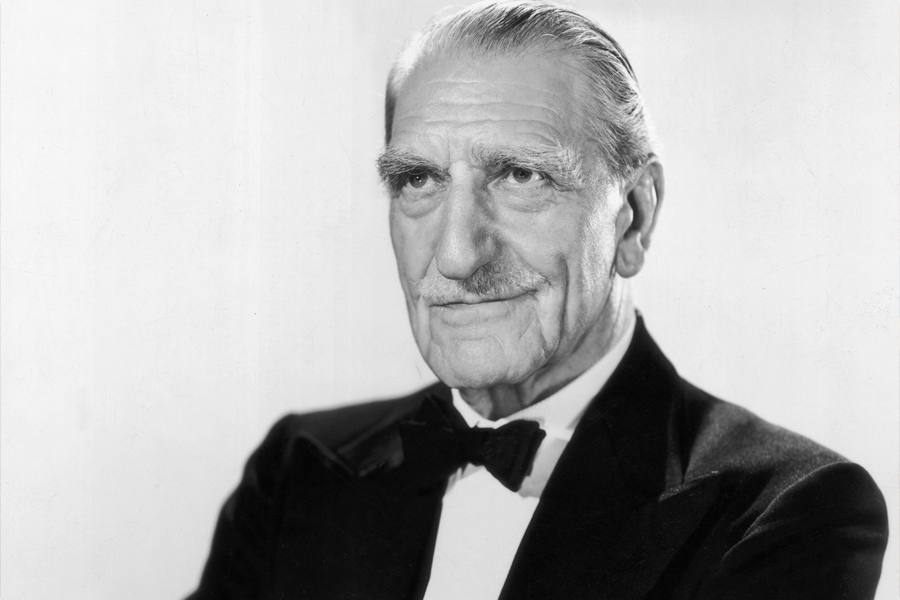
Basic information
| Item | Details |
|---|---|
| Full name | Charles Aubrey Smith |
| Known as | C Aubrey Smith |
| Born | 21 July 1863 |
| Birthplace | London, England |
| Died | 20 December 1948 |
| Place of death | Beverly Hills, California, United States |
| Nationality | English |
| Occupation | Cricketer, actor |
| Education | Charterhouse School, St John’s College, Cambridge |
| Spouse | Isabella, also recorded as Isobel Mary Scott Wood |
| Child | Honor Beryl Freda Clode Smith Cobb |
| Sibling | Beryl Faber |
| Parents | Charles John Smith and Sarah Ann Smith |
A life that moved like a double act
Perhaps C Aubrey Smith was one of the few people who seemed to inhabit two universes. Cricket was a hard, sunny arena with discipline, patience, and rigorous honor codes. On the other hand, wardrobe, voice, posture, and presence may make a guy a legend in theater and movies. He walked over that bridge effortlessly.
Smith, born in London on July 21, 1863, was raised in a refined England. He attended Charterhouse and St John’s College, Cambridge. Academics refined him, but cricket gave him steel. He wasn’t weak outside the game. He was in the middle of it, a fast bowler with enough menace and control to cement his position in English cricket history.
His career shape impresses me most. He didn’t switch lives. He carried first’s force into second. He was convincing as a military commander, judge, colonel, or nobleman on television because of that. He needed not act dignified. He wore it like a well-tailored coat.
Cricket before the camera
Smith’s cricket career came first, and it was not a brief prelude. He played for Cambridge University in the 1880s, then for Sussex over many years. He also represented England in a Test match against South Africa in 1889. In that match he took five wickets for 19 runs in the first innings, which is the sort of performance that does not fade easily.
Cricket in Smith’s era was a game of character as much as skill. The field was a stage, but it was also a proving ground. Smith carried himself like a man who understood both. He was a right arm fast bowler, a useful lower order batsman, and a strong slip fielder. Those are not glamorous qualities on paper, but together they form the bones of a serious cricketer. I read his sporting life as a long lesson in control, timing, and nerve.
His association with cricket did not end when acting became his profession. In fact, cricket seems to have followed him into nearly every chapter of his life. He remained a proud cricketer in Hollywood and later helped found the Hollywood Cricket Club in 1932. That detail always strikes me as wonderfully improbable. The man who became a familiar figure in costume dramas helped plant the game in California soil, almost like a gardener importing a favorite tree to a drier climate.
The actor with a face made for authority
Smith began acting in 1895. That date matters because it marks not a hobby, but a reinvention. He stepped from the world of sport into stage work and quickly found a niche. He had a deep, recognizable voice, a fine sense of bearing, and a face that suggested command even when he was silent. In silent film and early talkies, that kind of presence was gold.
He appeared on Broadway the same year he began on the stage, and his career eventually carried him into film in 1915. Over time he became one of those dependable character actors who could anchor a scene without demanding it. Directors could place him in a drawing room, an army tent, a school, or a country house, and the scene would immediately feel more solid.
His screen persona was almost architectural. He was the column in the room, the frame around the picture, the stern but reassuring weight that let everyone else lean into the drama. That is why he was so often cast as colonels, judges, generals, and elder statesmen. He had the gravity of old stone.
Among his best known screen associations was The Prisoner of Zenda, a story that suited his sense of grandeur. Later film appearances in titles such as Wee Willie Winkie, The Four Feathers, and Rebecca confirmed the image. He was the kind of actor who could appear in a few scenes and still leave behind the atmosphere of an entire household.
In 1944, he was knighted for services to the theatre. That honor feels fitting. By then, Smith had become more than a performer. He had become a symbol of a certain English ideal, polished but not brittle, firm but not cold.
Family roots, marriage, and children
Smith’s familial tale lies beneath his public appearance. His parents were Charles John and Sarah Ann Smith. Those names ground him in reality, not stage lights and film sets. Behind the iconic visage was a son formed by family, parental expectations, and morals.
Beryl Faber, his sister, was also a stage performer. This implies that performance is inherited. Beryl’s acting background lends Smith’s path a deeper pattern. The star was not alone. His parents understood public life and creative aspirations.
Smith married Isabella (Isobel Mary Scott Wood) in 1896. Their marriage lasted until his 1948 death, which is long. Long marriages are sometimes overlooked in biographies because they lack scandal or excitement, but I think they deserve attention. A lasting partnership is one of the hardest roles to fulfill. It requires patience, loyalty, and keeping shape in changing weather.
Honor Beryl Freda Clode Smith Cobb was their daughter. She seems to have been important to him, and her name has a rich family history. She carried on the Smith family line. As a father, Smith was a disciplined man whose home undoubtedly reflected his work.
Later years and lasting image
Smith spent his later years in the United States, eventually dying in Beverly Hills on 20 December 1948. He was 85. That is a long life for any public figure, and his life seems to stretch like a well drawn curtain from the Victorian age into the modern film era.
He was also remembered in another way, through cricket, club life, and Hollywood circles. He helped create spaces where English sport and English style could survive far from home. That is one of the best metaphors for his life. He was a transplanted oak, still upright, still recognizable, still offering shade.
What I admire most about Smith is the coherence of the whole man. He was not a cricketer who became an actor by accident. He was not an actor who stumbled into cricket nostalgia as decoration. He was a disciplined, public, and highly visible presence in both worlds. His family life, from his parents Charles John Smith and Sarah Ann Smith to his sister Beryl Faber, his wife Isabella, and his daughter Honor, gives the story another dimension. The public man had private roots. The knight had a home life. The screen figure had a surname carried by real people across generations.
FAQ
Who was C Aubrey Smith?
C Aubrey Smith was an English cricketer and actor born in 1863. He first made his name in cricket, then became famous in stage and film roles that emphasized dignity, authority, and British gentility.
What made him famous in cricket?
He was known as a strong fast bowler, a reliable fielding player, and an England Test cricketer. His best remembered Test performance came against South Africa in 1889, when he took five wickets in the first innings.
Why was he such a recognizable actor?
His voice, posture, and expression made him ideal for roles of rank and authority. He often played military men, judges, aristocrats, and other commanding characters.
Who were his immediate family members?
His parents were Charles John Smith and Sarah Ann Smith. His sibling was Beryl Faber. His wife was Isabella or Isobel Mary Scott Wood. His daughter was Honor Beryl Freda Clode Smith Cobb.
When did he marry?
He married Isabella, also recorded as Isobel Mary Scott Wood, in 1896.
Did his family connect to the arts?
Yes. His sister Beryl Faber was connected with stage acting, which suggests that performance was part of the family atmosphere.
When did he die?
He died on 20 December 1948 in Beverly Hills, California, at the age of 85.
What is his lasting legacy?
He is remembered as a bridge between cricket and classic cinema, and as one of the great screen presences of his era.